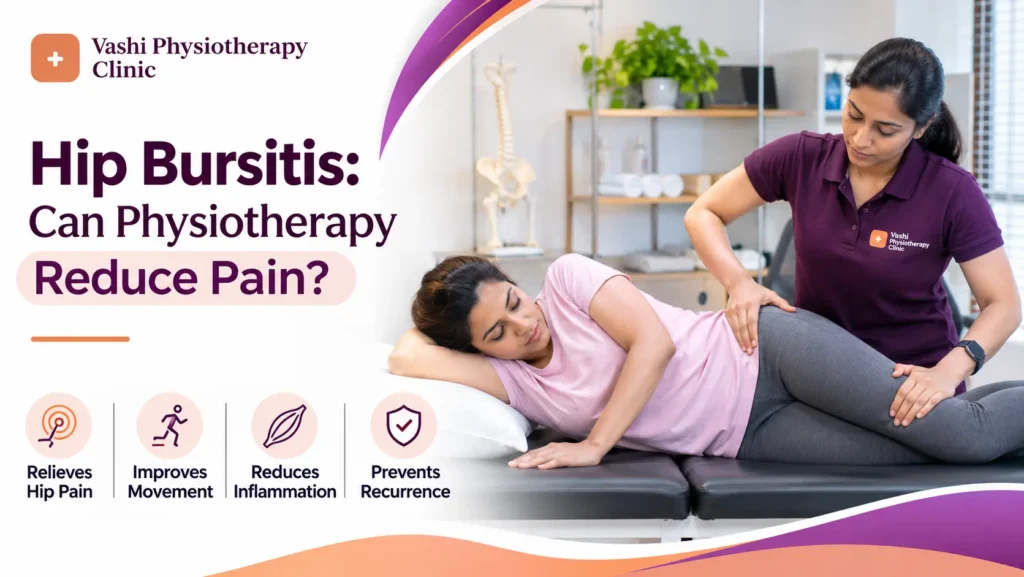
A sharp pull at the front of your hip when you sprint, a deep ache in the groin after a long day at your desk, or a tight, catching feeling every time you lift your knee to climb a stair. Hip flexor pain is common in runners, gym-goers, footballers, dancers and desk workers alike, and it can be surprisingly stubborn if it is not treated properly.
The good news is that most hip flexor problems respond very well to the right combination of rest, loading and strengthening. This guide explains what the hip flexors are, why they hurt, how to tell a simple strain from something else, and how physiotherapy can help.
What Are the Hip Flexors?
The hip flexors are a group of muscles at the front of the hip that lift your thigh towards your body. You use them with every step, every stair and every kick. The main players are:
- Iliopsoas (psoas major and iliacus): the strongest hip flexor, running from the lower back and pelvis to the top of the thigh bone.
- Rectus femoris: one of the four quadriceps muscles, which crosses both the hip and the knee.
- Sartorius, tensor fasciae latae (TFL) and pectineus: smaller muscles that help with lifting and rotating the leg.
Because the iliopsoas attaches to the lumbar spine, hip flexor problems and lower back problems often overlap.
Common Symptoms of Hip Flexor Pain
- Pain or tenderness at the front of the hip, in the groin or at the top of the thigh
- A sharp pain or “pulling” sensation when sprinting, kicking or lifting the knee
- Tightness or stiffness at the front of the hip after sitting for a long time
- Pain when climbing stairs, getting out of a car or putting on socks
- Weakness when lifting the leg
- A snapping or clicking feeling at the front of the hip, sometimes painless, sometimes painful
- In a more serious strain, bruising or swelling in the upper thigh or groin
Causes of Hip Flexor Pain
1. Hip flexor strain
A strain is a stretch or tear of the muscle fibres. It usually happens during sudden, powerful movements such as sprinting, kicking, change of direction or fast lunging, and is common in football, cricket, athletics and martial arts. Strains are graded by severity:
- Grade 1: mild overstretching with a tight, achy feeling. You can usually keep moving, with discomfort.
- Grade 2: a partial tear with sharper pain, some weakness and sometimes bruising.
- Grade 3: a complete or near-complete tear with severe pain, marked weakness and difficulty walking. This needs urgent medical assessment.
2. Hip flexor tendinopathy
Repeated overload of the tendon, from increased running mileage, more hill work, high-rep leg raises or a sudden jump in training, can irritate the tendon at the front of the hip. The pain tends to come on gradually, feels worse at the start of activity or after rest, and eases once warm.
3. Prolonged sitting and tightness
Sitting keeps the hip flexors in a shortened position for hours. Over time they can become tight and the glutes underactive, so every step asks the front of the hip to work harder. This is a common reason for hip flexor discomfort in desk workers and daily commuters. See our tips on commuting in Mumbai and a healthier workstation setup.
4. Weak core and glutes
When the glutes and deep core muscles are weak, the hip flexors often take over to stabilise the pelvis. They end up overworked and sore. This pattern is explained in our article on muscle imbalance and how physiotherapists assess it, and in core weakness and back pain.
5. Iliopsoas bursitis and snapping hip
A small fluid-filled cushion sits beneath the iliopsoas tendon. When it becomes irritated, you may feel a deep groin ache and a snapping sensation as the tendon slides over the front of the hip when you move from sitting to standing or swing the leg.
6. Hip joint problems
Femoroacetabular impingement (FAI), labral tears and early osteoarthritis can cause pain at the front of the hip that feels like a “muscle problem” but originates in the joint. Pinching, catching and pain on deep hip flexion are clues. Read our guides on hip pain while walking and hip pain after running.
7. Referred pain from the back or pelvis
Pain from the lumbar spine or sacroiliac joint can be felt in the groin and front of the thigh. If your hip flexor pain does not behave like a normal muscle problem, we also check the spine and pelvis. See sacroiliac joint pain and our lower back pain page.
8. Less common causes
Groin hernias, stress fractures of the pelvis or thigh bone, and in teenagers a pull-off injury of the bone where the tendon attaches (an avulsion fracture) can mimic hip flexor pain. This is one reason a proper assessment is worthwhile, especially after a sudden injury.
Who Is More Likely to Get Hip Flexor Pain?
- Runners and sprinters: see our running injury physiotherapy service.
- Football, cricket and other sports players: our cricket injury physiotherapy and wider sports physiotherapy services cover these injuries.
- Gym-goers: leg raises, heavy squats and sit-ups can overload the front of the hip. See gym injury physiotherapy.
- Dancers: high kicks and extreme ranges demand a lot from the hip flexors. See dance injury physiotherapy.
- Desk workers and long-distance travellers: sitting for hours tightens the front of the hip.
When to Get Help Quickly?
See a doctor promptly if you have:
- Sudden severe pain with a “pop” and difficulty walking or lifting the leg
- Significant bruising or swelling in the groin or thigh
- A bulge or lump in the groin that may be a hernia
- Pain at night or at rest that does not ease with any position
- Fever, unexplained weight loss or feeling generally unwell with hip pain
- Pain after a fall with inability to bear weight
- Numbness in the groin or inner thighs, or new bladder or bowel changes
How Is Hip Flexor Pain Diagnosed?
We begin with your story: what you were doing when the pain began, which movements hurt, and how it has changed. We then test hip range of movement, strength, flexibility, balance and walking or running pattern, and check the lower back and pelvis. A biomechanical assessment can show how your whole body moves, which often explains why the problem keeps coming back. If scans or medical tests are needed, we refer you appropriately. You can read more on our hip pain physiotherapy page.
Physiotherapy Treatment for Hip Flexor Pain
Treatment depends on the cause and severity, but a good plan usually follows these stages:
- Settle the pain. We adjust your activity so the hip flexor is protected without going completely still. Hands-on treatment, gentle mobility work and guidance on positions to avoid (such as prolonged deep sitting) ease symptoms early on.
- Restore movement. Gentle, controlled stretching and mobility work for the hip flexors, hip joint and lower back, introduced gradually. Aggressive stretching of a freshly strained muscle is avoided.
- Rebuild strength. We start with pain-free isometric holds, then progress to controlled hip flexor strengthening, glute and core work, and finally single-leg and functional exercises. Our strength and conditioning programme guides this safely.
- Retrain movement. Running technique, squat and lunge mechanics, and pelvic control are corrected so the hip flexors are not overworked.
- Return to activity. A graded return to running, sport or training, with clear tests before you go back to full intensity. We track more than pain, as explained in how physiotherapists measure recovery beyond pain scores.
How long does recovery take?
As a general guide, a mild (grade 1) strain often improves within one to three weeks, a moderate (grade 2) strain within roughly three to six weeks, and a severe tear can take several months. Tendinopathy and joint-related causes vary and usually take longer. Your own timeline depends on the cause, how long you have had symptoms and how well the load is managed.
Simple Things You Can Try at Home
For mild hip flexor discomfort without any warning signs, these ideas may help. Stop if anything sharply increases your pain.
- Break up sitting: stand up and walk every 30 to 45 minutes.
- Gentle hip flexor stretch: kneel on one knee, tuck your pelvis under and shift forward gently until you feel a mild stretch. Hold 20 to 30 seconds. It should not be painful.
- Glute bridges: lie on your back, lift your hips, pause and lower slowly. 10 repetitions, 2 sets.
- Dead bug or gentle core work: train the deep core so the hip flexors do not have to do the job alone.
- Warm up properly before running or sport, with leg swings and light marching.
- Increase training gradually, by no more than about 10 percent a week for running distance.
If the pain does not improve in a couple of weeks or keeps returning, have it assessed rather than pushing through.
Frequently Asked Questions
Should I stretch a painful hip flexor?
Gentle, pain-free stretching can help a tight muscle, but a freshly strained or irritated tendon often does better with rest from aggressive stretching and a progressive strengthening plan. Overstretching can aggravate the problem.
Can sitting too much cause hip flexor pain?
Yes. Long periods of sitting shorten and tighten the hip flexors and let the glutes switch off, so the front of the hip works harder when you stand and move.
Is hip flexor pain the same as groin pain?
They overlap. Pain in the groin can come from the hip flexors, the adductor muscles on the inner thigh, the hip joint, a hernia or the lower back. Assessment sorts out which one it is.
Can I keep running with hip flexor pain?
It depends on severity. For a very mild strain, reducing speed, hills and distance may be enough. If pain changes your running pattern or lingers afterwards, take a break from running and get assessed.
Do I need a scan?
Often not. Many hip flexor problems can be diagnosed through a thorough physical assessment. Imaging is useful for severe injuries, unclear diagnoses or when joint problems are suspected.
Get Your Hip Flexor Pain Assessed in Worli
Hip flexor pain tends to linger when it is ignored or treated with stretching alone. A proper assessment, clear diagnosis and a progressive plan will get you moving and training comfortably again. Book an appointment with Worli Physiotherapy, or contact us to speak with our team. If travelling is difficult, ask about home visit physiotherapy in Worli, and read what to expect at your first visit. If night pain is part of your problem, see hip pain when sleeping on your side.