Pain on the outer side of the knee, medically called lateral knee pain, is a very common complaint among runners, gym-goers, cyclists, footballers and even people who simply spend long hours walking and commuting around Mumbai. When it appears, most people and many online articles immediately blame iliotibial (IT) band syndrome. It is indeed a frequent culprit, but it is far from the only one.
Treating the wrong problem is one of the main reasons outer knee pain lingers for months. Stretching and foam rolling an IT band will not help if the real issue is a meniscus tear, a ligament sprain or a nerve irritation. This guide explains the main causes of outer knee pain beyond IT band syndrome, how to tell them apart and when it is time to get properly assessed.
A Quick Look at the Outer Knee
The outside of the knee is a crowded area. The lateral collateral ligament runs along the outer joint to stop the knee from bending sideways. The lateral meniscus, a cushion of cartilage, sits between the thigh bone and the shinbone. The biceps femoris tendon, part of the hamstring group, attaches just behind it, along with the popliteus tendon, which helps unlock the knee when it starts to bend. The IT band itself is a thick strip of tissue running down the outer thigh and attaching just below the knee, and the common peroneal nerve winds around the outer upper edge of the lower leg. With so many structures in close quarters, the exact location, timing and type of pain offer important clues to the source.
Why IT Band Syndrome Gets the Blame?
IT band syndrome typically produces a sharp or burning pain on the outer knee during running or cycling, often starting at a predictable point, such as after a certain distance, and easing quickly with rest. It is common and genuinely responds well to treatment, which is why it is so often named first. However, when the pain behaves differently, such as appearing at rest, during twisting, after a fall or alongside swelling or locking, it is worth looking further. A thorough assessment for knee pain helps separate the many possibilities rather than guessing.
Lateral Meniscus Injury
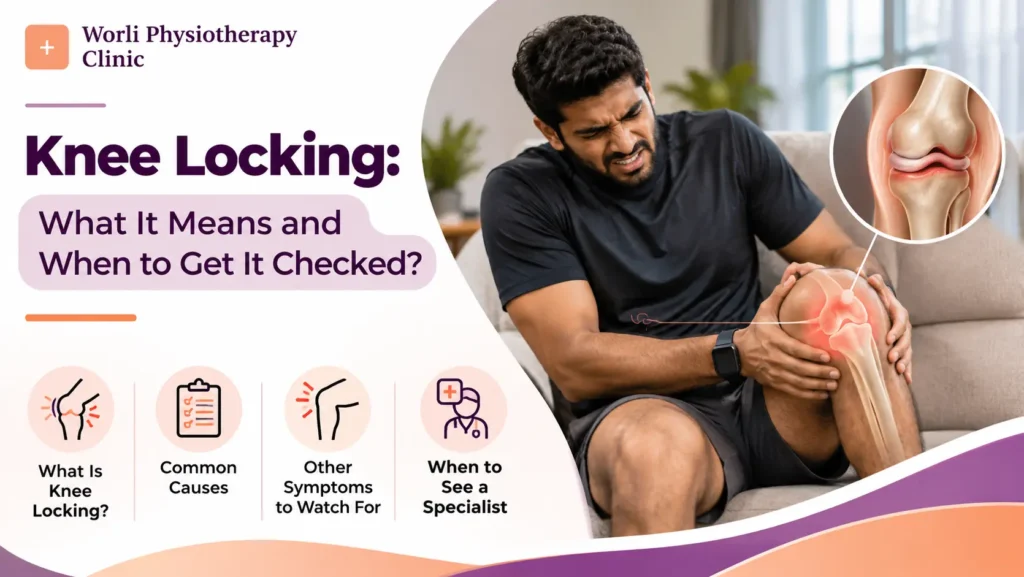
The lateral meniscus can be torn through a twisting movement while the foot is planted, such as pivoting in football or badminton, or it can gradually wear down with age. Typical signs include pain along the outer joint line, swelling that develops over a day or so, a catching or clicking sensation and, in some cases, the knee locking or feeling unable to straighten fully.
Not all meniscus injuries need surgery. Small or degenerative tears often improve with a structured strengthening programme, while larger or mechanically blocking tears may need an orthopaedic opinion. Because the symptoms can closely resemble IT band pain in the early stages, a hands-on examination is important.
Lateral Collateral Ligament Sprain
The lateral collateral ligament, or LCL, is injured when the knee is forced inwards, towards the other leg, or hit on its inner side. It is less commonly injured than the ligament on the inside of the knee, but it does occur in contact sports, falls and accidents. Pain and tenderness sit directly over the ligament on the outer side, and more serious sprains cause a feeling of the knee wobbling or giving way, particularly when walking on uneven ground.
Mild sprains usually recover well with protected movement and progressive rehabilitation. Severe injuries, particularly those that involve other structures, require specialist assessment.
Biceps Femoris and Popliteus Tendinopathy
Tendons that become irritated from overload can also cause outer knee pain. The biceps femoris tendon, at the back-outer corner of the knee, can become sore in sprinters, footballers and people who suddenly increase hill running or speed work. The popliteus tendon, which sits deeper at the outer knee, is more often affected by downhill running and by repetitive twisting.
These tendon problems typically produce a localised ache that is worse with activity and tender to touch at a specific spot. They respond best to a gradual loading programme, since complete rest tends to weaken the tendon further rather than heal it.
Lateral Compartment Osteoarthritis
In people over forty, persistent outer knee pain may be linked to wear and tear of the cartilage on the outer side of the joint. This pattern is more common in those with a bow-legged or knock-kneed alignment, a past meniscus injury or a family history of joint problems. Stiffness after rest, pain with weight-bearing and a gradual loss of knee movement are typical clues.
The encouraging news is that exercise therapy, weight management and activity pacing can significantly reduce symptoms. A structured approach to arthritis physiotherapy focuses on strengthening the muscles that support the joint and improving how load is shared across the knee.
Patellofemoral Pain and Kneecap Tracking
The kneecap sits at the front of the knee, but when it is pulled too far outward by tight or imbalanced tissues, discomfort can be felt along its outer edge. This tends to flare during stairs, squatting, long periods of sitting and running downhill. Weak hip and thigh muscles, flat feet and poor knee control during landing are frequent contributors, and strengthening and movement retraining form the cornerstone of recovery.
Nerve Irritation Around the Knee
Sometimes the pain is not coming from the knee joint at all. The common peroneal nerve passes close to the surface on the outer side of the knee, just below the head of the fibula, and it can be irritated by prolonged crossing of the legs, tight braces, repeated squatting or an ankle sprain. Burning pain, tingling or numbness on the outside of the lower leg or top of the foot, and sometimes a weak ankle that causes the foot to drag, are warning signs that point to a nerve source.
Because nerve problems need a different approach, early recognition matters. If numbness or weakness is present, do not delay getting assessed.
Pain Referred From the Hip and Lower Back
One of the most overlooked explanations is that the outer knee is simply where the pain is felt, while the real problem lies higher up. Irritation of a nerve root in the lumbar spine, weakness of the gluteal muscles or a problem at the hip joint can all refer discomfort down the outer thigh and into the knee. In such cases, the knee looks normal on examination, treatments directed at it do not work, and symptoms often change with sitting, bending or spinal movements.
A pattern of pain that travels down the leg may point towards the back, and conditions such as sciatica or hip pain deserve consideration before blaming the knee alone. Examining the spine and hip is a routine part of a proper knee evaluation for this very reason.
Stress Injuries and Other Less Common Causes
Less commonly, repetitive overload can cause a stress reaction in the bones around the knee, particularly in distance runners who ramp up mileage quickly. Pain from this is deep, aching and often worse at the end of a run or at night. Inflammatory conditions and gout can also cause sudden, hot, swollen joint pain that is quite different from a mechanical injury and requires a medical review. These are reminders that persistent unexplained pain should never simply be ignored or self-treated indefinitely.
How Physiotherapists Find the Real Cause?
Accurate diagnosis starts with a detailed conversation about when the pain began, what activities provoke it and whether any twisting, fall or sudden change in training preceded it. The examination then tests joint movement, ligament stability, tendon tenderness, nerve function, muscle strength and the way you squat, step and land. Observing the movement pattern as a whole is especially valuable, and a biomechanical assessment can reveal alignment or movement faults in the foot, knee, hip or trunk that quietly overload the outer knee.
Where required, your physiotherapist will advise further investigations such as an MRI or ultrasound, or refer you to an orthopaedic specialist. Clear communication between the two ensures you receive the right treatment without delay.
What Treatment Typically Involves?
Although the cause determines the details, outer knee rehabilitation usually follows common principles. Pain is first settled by temporarily adjusting the activities that aggravate it, along with manual therapy and gentle movement. Strengthening of the hip, thigh and calf muscles follows, since weakness in these areas is behind many outer knee problems. Balance, landing and movement control training then prepare the knee for real-life demands, and a gradual return to running, sport or work is planned.
For athletes and active people, tailored sports physiotherapy helps bridge the gap between feeling better and being genuinely ready to perform again, while strength and conditioning builds the resilience that prevents the pain from returning.
Preventing Outer Knee Pain
Prevention begins with gradual progression of training load, regular rest days, supportive footwear replaced at sensible intervals and strength work for the hips and legs at least twice a week. Varying running surfaces, avoiding sudden jumps in hill or speed work and paying attention to early warning niggles can also make a big difference. For desk workers, regular breaks from prolonged sitting and avoiding habitual leg crossing reduce stress on both the joint and the nerve.
When to See a Professional?
Arrange an assessment if outer knee pain lasts more than two weeks, keeps returning, wakes you at night, follows a twisting injury or fall, or comes with swelling, locking, giving way, numbness or foot weakness. Seek urgent medical attention for severe pain with fever, a hot red swollen joint, or an inability to bear weight.
Conclusion
Outer knee pain has many possible sources, and IT band syndrome is only one of them. Meniscus injuries, ligament sprains, tendon problems, arthritis, kneecap tracking issues, nerve irritation and pain referred from the hip or back can all look similar at first glance, which is why a careful assessment matters more than any quick fix. Identifying the true cause is what turns months of frustration into a clear, effective recovery plan.
If you have been struggling with pain on the outside of your knee, the team at Worli Physiotherapy can help you find out exactly what is behind it and treat it properly. Backed by detailed orthopaedic physiotherapy care, Worli Physiotherapy builds a personalised plan around your diagnosis, your lifestyle and your goals. Book your assessment with Worli Physiotherapy today and take a confident step towards pain-free movement.