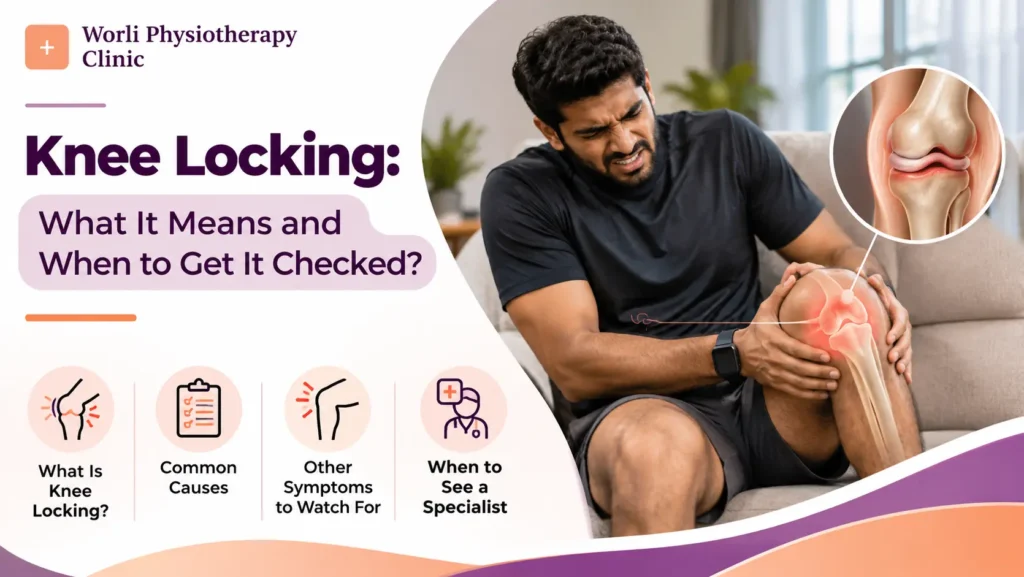
You wake up, swing your legs off the bed, and your knee looks puffy. There was no fall, no twist on the football field, no awkward landing. Yet the joint feels tight, warm, or heavy, and bending it is suddenly uncomfortable.
A swollen knee with no clear injury is more common than most people think, and it is often confusing because there is no obvious “reason” to point to. The good news is that the swelling itself is a useful clue. Understanding what is behind it is the first step towards treating it properly instead of just waiting and hoping it goes away.
In this guide, we explain why a knee can swell without any injury, which symptoms deserve urgent attention, and how physiotherapy can help.
What Is Actually Happening When a Knee Swells?
Your knee joint is wrapped in a thin lining called the synovium. It produces a small amount of lubricating fluid that keeps the joint moving smoothly. When something irritates the joint, the lining responds by producing extra fluid. This is what people often call “water on the knee,” and doctors refer to it as a knee effusion.
So swelling is not the problem itself. It is the body’s reaction to something else, such as wear, inflammation, overload, or in rare cases, infection. Finding that underlying trigger is what makes treatment work.
Common Causes of a Swollen Knee Without Injury
1. Osteoarthritis
Osteoarthritis is one of the most frequent reasons for a gradually swelling knee, especially after the age of 40. As the cartilage that cushions the joint thins out, the joint lining becomes irritated and produces more fluid.
Typical signs include:
- Stiffness in the morning that eases within 30 minutes
- Pain that worsens while climbing stairs or standing up from a chair
- A grating or cracking feeling when the knee moves
- Swelling that flares up after a long walk or a busy day
If this sounds familiar, our arthritis physiotherapy care focuses on reducing joint load, improving strength, and keeping the knee moving comfortably.
2. Inflammatory Arthritis (Such as Rheumatoid Arthritis)
Unlike wear-related arthritis, inflammatory types occur when the immune system mistakenly targets the joint lining. The swelling is often persistent, warm, and may affect both knees or other joints, such as the hands and feet.
Prolonged morning stiffness lasting more than an hour is a common clue. This type of swelling needs a medical diagnosis and blood tests, and physiotherapy then works alongside medical treatment to protect joint movement and strength.
3. Gout and Pseudogout
Both conditions are caused by tiny crystals forming inside the joint. Gout involves uric acid crystals, while pseudogout involves calcium-based crystals. Either can trigger a sudden, intensely painful, hot, and swollen knee, often appearing overnight with no injury at all.
Because the onset is so abrupt and the joint can look red and feel very tender, many people assume they have hurt themselves. A doctor can confirm the cause with fluid analysis or blood tests.
4. Bursitis
Small fluid-filled sacs called bursae sit around the knee to reduce friction. Repeated kneeling, prolonged squatting, or pressure on the knee can irritate them. The result is swelling that sits in front of the kneecap or on the inner side of the knee, rather than deep inside the joint.
5. Meniscus Wear and Degeneration
The meniscus is the cartilage cushion between your thigh bone and shin bone. With age or repeated stress, it can develop small degenerative tears without any single dramatic event. This often causes mild, recurring swelling along with catching, clicking, or a feeling that the knee briefly “locks.”
6. Overuse and Poor Movement Mechanics
Sometimes the knee swells simply because it has been doing too much, or doing things inefficiently. A sudden jump in walking, running, or gym training, weak hip and thigh muscles, flat feet, or poor alignment can all overload the joint over time. The swelling builds up quietly rather than appearing after a single incident.
A detailed biomechanical assessment can reveal these hidden movement faults before they turn into a long-term problem.
7. Baker’s Cyst
A Baker’s cyst is a fluid-filled swelling at the back of the knee. It usually develops because another problem inside the joint, such as arthritis or a meniscus issue, is producing excess fluid. You may notice tightness behind the knee, especially when fully bending or straightening it.
8. Infection (Rare but Serious)
A joint infection, known as septic arthritis, is uncommon but needs emergency care. It can follow a skin wound, a recent procedure, or an infection elsewhere in the body.
Warning Signs: When to See a Doctor Urgently?
Please do not wait if your swollen knee comes with any of the following:
- Fever or chills along with a hot, red, and very painful knee
- Sudden severe swelling with inability to put weight on the leg
- Swelling and pain in the calf, with warmth or redness (this can indicate a blood clot)
- Swelling after a recent surgery, injection, or skin wound near the knee
- Swelling that keeps returning or has not improved after a week or two
These situations need medical evaluation first. Physiotherapy is most effective once serious causes have been ruled out.
What You Can Do at Home Right Now?
For mild swelling without any warning signs, simple steps can ease discomfort while you arrange an assessment:
- Rest the joint from aggravating activity, but keep gentle movement going so the knee does not stiffen
- Elevate the leg when sitting or lying down
- Apply a cold pack wrapped in a cloth for 10 to 15 minutes if the knee feels warm and sore
- Use light compression with a soft knee sleeve if it feels comfortable
- Avoid deep squatting, kneeling, and long stair sessions until the swelling settles
Home care can calm symptoms, but it does not fix the reason the swelling started. If it keeps coming back, the cause still needs to be identified.
How Physiotherapy Helps a Swollen Knee?
Good physiotherapy begins with working out why your knee is swelling, not just treating the puffiness. A thorough assessment looks at your joint movement, muscle strength, walking pattern, posture, and daily habits.
Treatment is then built around your findings and may include:
- Manual therapy to improve joint movement and ease stiffness
- Targeted strengthening for the quadriceps, hamstrings, glutes, and calf muscles
- Pain and swelling relief techniques to calm the irritated joint
- Gait and movement retraining to take pressure off the knee
- Guidance on activity pacing, footwear, and safe exercise
- A progressive home programme to keep improvements going
Our knee pain physiotherapy programme follows exactly this approach, and our orthopaedic physiotherapy team treats a wide range of joint and muscle problems under one roof. You can also read more about knee pain causes and treatment on our conditions page.
If your swelling has lingered for months or comes with ongoing aches in other joints, our chronic pain management approach can help you build a long-term plan that goes beyond short-term relief.
Conclusion
A swollen knee without an injury is your body’s way of saying something inside the joint needs attention. Whether the cause is arthritis, bursitis, meniscus wear, or simple overload, finding the root issue early protects your mobility and prevents a minor problem from becoming a long-term limitation.
If your knee swelling is persistent, recurring, or affecting your daily routine, do not wait for it to get worse. At Worli Physiotherapy, our team will assess your knee, identify what is driving the swelling, and build a recovery plan that helps you walk, climb stairs, and move with confidence again.
This article is for general information only and is not a substitute for medical advice, diagnosis, or treatment. If you have severe pain, fever, or sudden swelling, please consult a doctor promptly.